-

- 16 June 2026
- Comment (0)
Cape Verde stuns Spain with goalless draw, relying on brilliant play by goalkeeper
ATLANTA – Not too many believed.
But those Cabo Verde fans inside Atlanta Stadium and around the world understood it was possible. And when match time had expired, the Blue Sharks had held off the periennal World Cup favorites, the Spainards who threw every shot at them but were denied by a relentless defense and a stolid goalkeeper.
Dominating possession with 74 percent, Spain displayed an impressive offensive onslaught but failed to convert opportunities into goals. The match ended in a goalless draw with a final score of 0-0.
In the end, Cabo Verde fans collectively said, "Yep."
They believed that a small nation team, in the tounament for the first time in history, could stand tall against a team with world class players and emerging super stars. Against the European champions – owners of 17 World Cup appearances.
"This means everything for our country especially," Cabo Verde coach Pedro Leitão Brito said through translation. "We have always said that we wanted everybody to see our country, our team. We have shown organization and braveness. And this is proof of what our country is about."
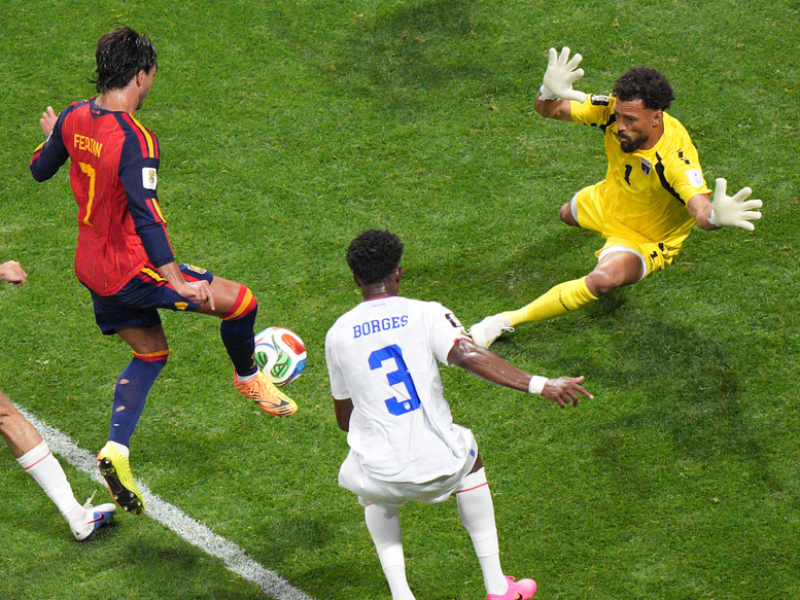
Goalkeeper Vozinha turned in a world class performance on the biggest international stage with Blue Sharks fans belting out load with every sure-handed deflection.
"Today the dream came true," he said. "We competed against Spain. It's one of the best national teams in the world. And we are very very happy. Very proud."
Vozinha said he cried at the end of the match, reminded of his deceased grandfathers and mother, who could not attend because of an inability to purchase a visa.
The Blue Sharks are the third-least populated nation – behind Iceland and Curacao – to ever qualify for the tournament. When they got a shot, they made the most of it.
A scoreless draw will be seen as a win-win scenario around the world where these types of moral victories are judged. The Blue Sharks earn a point for their efforts.
Spain's tactical play resulted in 25 total shots, seven on target, but a stubborn Cabo Verde Islands' defense, supported by seven crucial saves from the goalkeeper Vozinha, held firm.
His outstanding performance has lifted him to unexpected acclaim, considering his Instagram follwers jumped by about two million followers.
So much for a day's work.
"When we woke up this morning, the vibes were good," Cabo Verde defender Steven Moreira said. "No pressure. Just play free. We did a really good job. We fight to the end."
Spain's midfield orchestrated play effectively, as evidenced by their remarkable passing accuracy of 92 percent from 796 total passes.
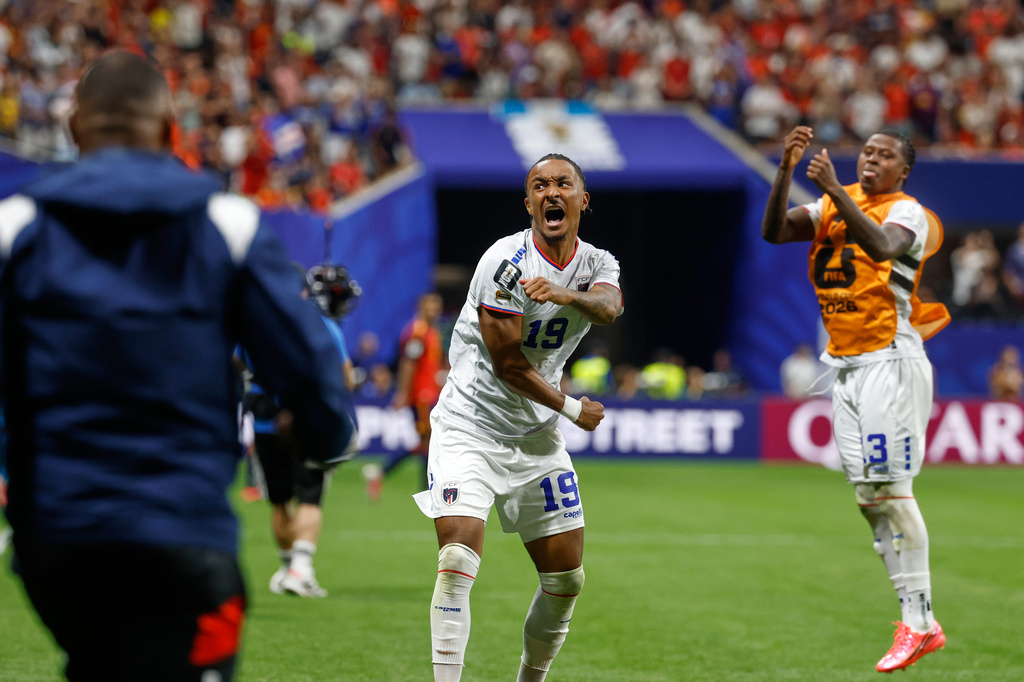
Cabo Verde Islands, holding the ball for only 26 percent, struggled to threaten Spain's defensive lines, managing only six total shots with a solitary strike on goal.
The team employed multiple substitutions in the second half, registering five changes to sustain their defensive stance.
"We just helped each other a lot," Moreira said. "We played Spain, so we had to help each other a lot. And you can see we are family."
Disciplinary actions saw yellow cards issued to Sidny Lopes Cabral in the 16th minute and Pedri of Spain in the 90th minute, highlighting a generally disciplined match demeanor from both teams.
Cabo Verde next faces Uruguay on June 21 in a second Group Stage match at Miami Stadium.
"Now in the group we have good position," Cabo Verde midfielder Laros Duarte said. "This gives us confidence a lot. I think we can show now on the ball how good we are."
About the Game
Welcome to the world of the FIFA World Cup, a global football tournament. Football, also known as soccer in some countries, is a team sport played by two teams of 11 players each on an outdoor field.
The main goal is to score more goals than the opposing team. A goal is scored when the ball is kicked into the opposing team's large net, called the goal. Games last 90 minutes, divided into two halves of 45 minutes each, with a short break in between called halftime.
Players use their feet to kick the ball, but they can also use their heads or other parts of the body, except their hands and arms. Only the goalkeeper, who stays near the goal to try to stop shots, can use hands within a specific area called the penalty box.
Some important terms you'll hear include "offside," which is when a player is in an illegal position closer to the opponent's goal than the ball and the second last opponent, and "fouls," which are rule violations leading to free kicks or penalty kicks, depending on where they occur.
The FIFA World Cup occurs every four years and is considered the most prestigious football competition in the world. In 2026, teams from around the globe compete for the title. The tournament is structured with a group stage followed by knockout rounds. Initially, teams are divided into groups and each team plays against the others in its group.
Teams earn points for each match: three points for a win, one for a draw, and none for a loss. The best teams advance to the knockout stage, where they compete in direct elimination matches until only one team remains as the champion.
The World Cup is exciting because it brings nations together in a celebration of culture and sport, showcasing the best talents and fostering international camaraderie.
Understanding these basics helps you follow the matches and enjoy the thrilling spectacle of the world’s most-watched sporting event.