-

- 21 May 2026
- Comment (0)
Creatively Black Baltimore Transforms Harborplace — and Prepares for Its Next Chapter
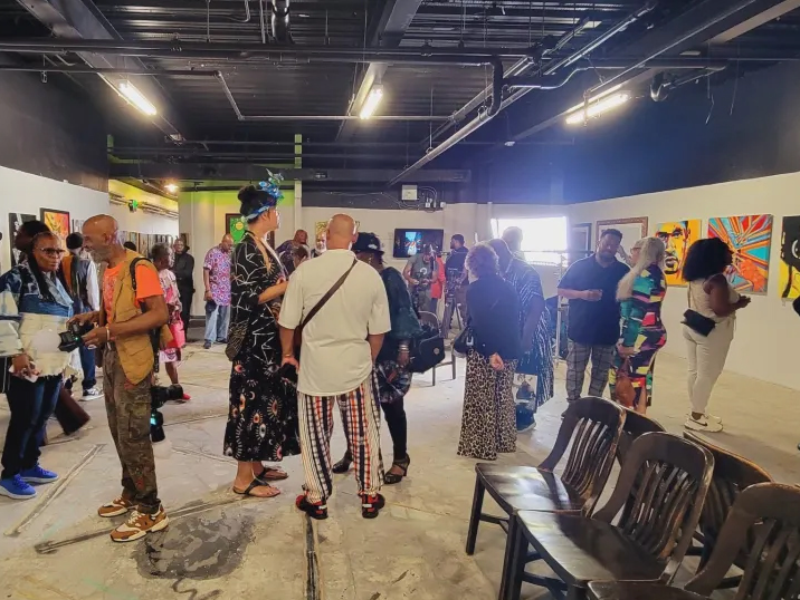
At Baltimore’s Inner Harbor, where tourists once lined up to experience the oddities of Ripley’s Believe It or Not!, a different kind of wonder now fills the halls. Inside the Light Street Pavilion, the sprawling Creatively Black Baltimore Pop-Up Exhibition has emerged as one of the city’s most ambitious celebrations of Black art, culture, and creative entrepreneurship.
Occupying approximately 12,000 square feet of the former Ripley’s space at Harborplace, the exhibition showcases nearly 500 works from over 100 emerging and established Black artists from across Baltimore and the surrounding region. Organized by Joy Bramble and Paris Brown of The Baltimore Times and Times Community Services in collaboration with veteran artist and curator Larry Poncho Brown, the project has evolved into far more than a temporary art show. It has become a cultural destination, educational hub, and economic platform designed to elevate Black creatives in a city long rich in artistic talent but often lacking consistent institutional support.
Visitors entering the exhibition encounter an immersive experience: paintings, photography, sculpture, mixed media installations, fashion, and cultural programming woven together under one roof. Workshops, artist talks, panel discussions, wellness events, youth programming, and entrepreneurial training sessions regularly activate the massive waterfront venue. Organizers say the mission has always been to remove barriers and create a truly inclusive platform for artists at every stage of their careers.
“This space proved what’s possible when Black artists are given room to be fully seen,” said supporters of the initiative, which many now consider one of the largest showcases of Black art in the region. Through partnerships with organizations like Ujamma Digital, artworks are also linked to e-commerce opportunities, allowing visitors to directly support artists and invest in Baltimore’s creative economy.

The exhibition’s rise also represents an unlikely rebirth for Harborplace itself. Once a nationally recognized retail destination, the Light Street Pavilion had fallen largely vacant following the closure of Ripley’s Believe It or Not! in 2020 and the broader decline of Harborplace during the pandemic years. Under redevelopment plans led by MCB Real Estate, the aging pavilions have been temporarily reactivated through pop-up retail, arts programming, and community-based initiatives designed to keep the waterfront vibrant during the transition period.
But the current chapter at Harborplace is nearing its conclusion.
With demolition and redevelopment plans for the Inner Harbor expected to move forward in fall 2026, organizers confirmed that Creatively Black Baltimore will close its current Light Street Pavilion location in September 2026. The redevelopment, spearheaded by MCB Real Estate, aims to replace the aging pavilions with a new mixed-use waterfront district featuring residential towers, retail space, public gathering areas, and expanded cultural programming.
Rather than viewing the closure as an ending, organizers describe it as a transition into a new era.
Plans are now being explored for a future home at the iconic Top of the World Gallery inside Baltimore’s World Trade Center. The proposed partnership would unite The Baltimore Times, Create Baltimore, and cultural leaders committed to preserving the momentum established at Harborplace while creating a permanent and internationally visible destination for Black creativity in downtown Baltimore.
The Top of the World Gallery — known for its panoramic views of the city and Inner Harbor — could provide a symbolic continuation of the exhibition’s mission: elevating Baltimore artists while placing Black art at the center of the city’s cultural and tourism landscape.
Supporters believe the move could expand opportunities for exhibitions, educational initiatives, international partnerships, and year-round programming while further cementing Baltimore’s reputation as a national center for Black artistic excellence.
For many artists involved, Creatively Black Baltimore has already achieved something historic. It transformed an abandoned retail space into a thriving cultural ecosystem and demonstrated how art can help reimagine the future of downtown Baltimore itself.
As Harborplace prepares for redevelopment, the exhibition leaves behind more than memories on gallery walls. It leaves a blueprint for what inclusive cultural investment can look like — bold, accessible, community-centered, and unapologetically Black.