-

- 12 March 2026
- Comment (0)
Detroit Put a Youth Club Inside an Innovation District. The World Should Pay Attention.
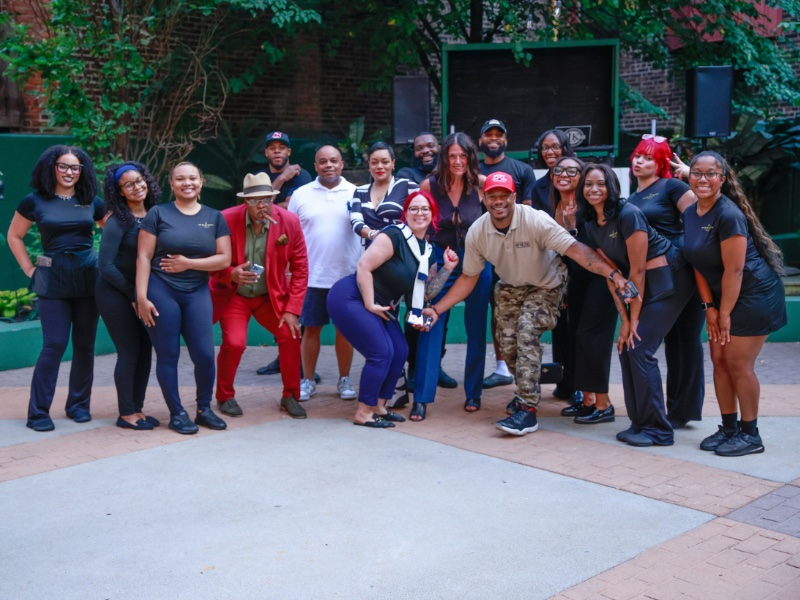
During a media session for the opening of the Boys & Girls Club of Greater Detroit campus at Michigan Central, Usher, Big Sean, Shawn Wilson, Carolina Pluszczynski, and Ryan Gustafson addressed the significance of placing youth inside an active economic district, followed by a private soft opening celebrating the launch.
DETROIT — The future of youth development is being financed, staffed, and built inside Michigan Central Station, where the Boys & Girls Club of Greater Detroit has opened a new campus after three years of planning.
The new campus places members of the Boys & Girls Club of Greater Detroit inside Michigan Central’s innovation district, where more than 200 companies are actively building and scaling. The long-term investment strategy, structured to reach $30 million over the next decade, reframes youth development as economic participation rather than preparation.
Inside Michigan Central’s operating ecosystem, the campus places youth alongside founders, engineers, and employers across mobility, technology, manufacturing, and creative industries as active participants rather than observers.

The campus is part of Michigan Central’s broader economic footprint, which spans mobility research, advanced manufacturing, and creative production. Rather than separating youth programming from economic activity, the model shortens the distance between learning and participation and positions young people inside working systems where decisions and production already occur.
Carolina Pluszczynski, chief operating officer of Michigan Central, described the campus as a pipeline connecting young people to real work and real opportunity. Speaking during the opening panel, she said the investment represents
“a commitment to build to provide access and opportunity for the youth of Detroit,” adding that the focus is placing young people inside “a live ecosystem” connected to “the jobs of the future.”
“When we started at Michigan Central, I think we had 10” startups nearby, she said. “Today we have over 200 companies” building in Detroit because the city connects universities, industrial expertise, and industries capable of manufacturing, deploying, and hiring.”
For a global audience, the distinction is structural. In many cities, youth programs sit near innovation districts and emphasize inspiration. At Michigan Central, the Boys & Girls Club campus operates within daily activity, reducing the gap between exposure and participation.
Shawn Wilson, president and CEO of the Boys & Girls Club of Greater Detroit, said the Michigan Central campus is not a replacement for neighborhood clubs but an extension of them. He described the approach as a feeder system, with neighborhood clubs preparing youth who then move into the district and carry knowledge back into their communities.
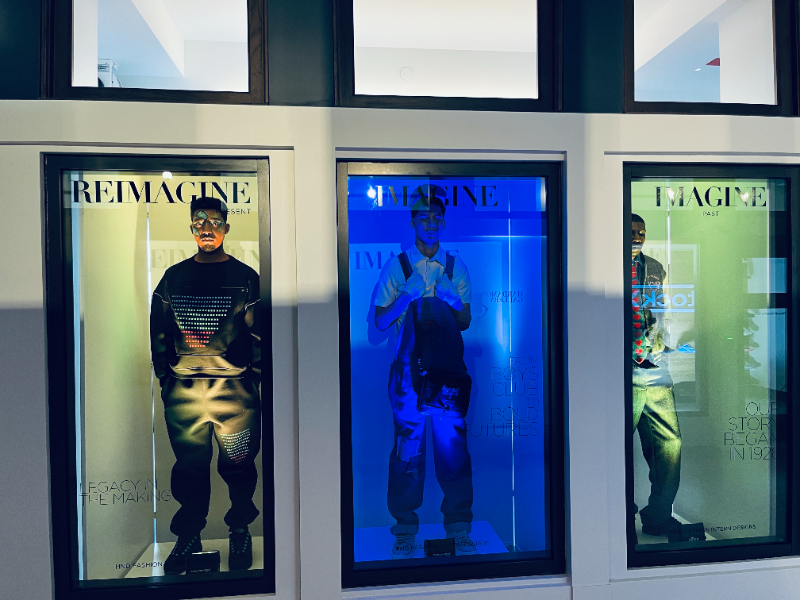
Wilson pointed to outcomes achieved, including sending youth to Abu Dhabi to compete in autonomous racing leagues and to New York Fashion Week to present their own designs. What changes at Michigan Central, he said, is proximity.

“To literally sit side by side” with founders and learn “real time,” Wilson said, is “the power of this collaboration.”
Big Sean, who participated in the opening discussion, described what is happening inside Michigan Central as “a whole new model,” created by bringing startups, academics, industry partners, universities, and youth into a shared environment where collaboration happens daily.
He later spoke directly about his financial involvement, stating that he has invested $1.5 million into Boys & Girls Club-related work. He rejected the idea that the effort is performative. “Cameras on, cameras off,” he said. “It don’t matter to me.”
Stripped of celebrity, the argument presented throughout the panel was economic.
Ryan Gustafson, chief executive officer of Ilitch Sports + Entertainment, framed the initiative as a private-sector responsibility tied to workforce outcomes. He said the work sits “at the intersection” of what his organization believes, investing in community and expanding opportunity, while using sports and entertainment “as a platform” to help access translate into jobs.
Usher widened the lens beyond Detroit. While acknowledging the attention surrounding the opening, he cautioned against mistaking visibility for outcome. “The fact that we have this media, we have this opportunity, is great,” he said. “But it’s what’s going to happen… in these small rooms” that determines whether time and effort become reality.
That emphasis aligns with national data. According to the most recent U.S. Global Entrepreneurship Monitor report, 24 percent of people ages 18 to 24 are currently entrepreneurs, while 21 percent say they plan to start a business within three years. Rising entrepreneurial interest without infrastructure often leads to churn. Access paired with space, mentorship, equipment, and employer proximity can lead to companies, careers, intellectual property, and retention.
The opening also surfaced a harder truth about readiness. Author and activist Shaka Senghor spoke about literacy as a structural dividing line rather than an abstract metric. “There’s no secret that there’s a correlation between our incarceration rates and our literacy rates,” he said. He described the Michigan Central space as different because “what we’ve done here is we made literacy cool.”
Nationally, Boys & Girls Clubs of America reports serving 4.2 million young people in 2024 across the United States and U.S. military installations worldwide, with nearly 500,000 engaging with a club each day. Detroit’s approach places that model inside an innovation district where young people can see how industries operate and move from exposure to skill, from skill to pay, and from pay to ownership.
As the panel concluded, Wilson encouraged visitors to walk the space and meet the youth, calling what they were seeing “just the beginning.”