
-

- 01 June 2026
- Comment (0)
The Man Who Helped Turn Bitcoin Into Something You Can Hold
On May 22, 2010, a man traded 10,000 Bitcoin for two Papa John’s pizzas.
Today, that transaction would be worth more than $700 million.
The story has become part of internet history, reposted every year across crypto forums, X timelines and Reddit threads as Bitcoin Pizza Day. What started as an early transaction now functions like digital folklore.
Crypto company Ballet leaned directly into that mythology recently with a limited-edition Bitcoin Pizza wallet tied to the anniversary. The stainless steel cold storage cards arrived packaged like collectibles. Some purchases included pizza gift cards.
But underneath the marketing is a bigger question the crypto industry still hasn’t solved: why do people trust something they can’t physically see?
“It’s internet magic money,” Ballet founder Bobby Lee told WorldsEdge during the interview.

Lee laughed when he said it. Then explained the vision.
“When something is physical, people can see and touch and feel it. It’s tangible.”
That physical connection has become part of Ballet’s business model. The company creates metal cold storage wallet cards designed to hold Bitcoin, Ethereum, Dogecoin and other crypto assets offline.
I tested one of Ballet’s special edition wallet cards myself.
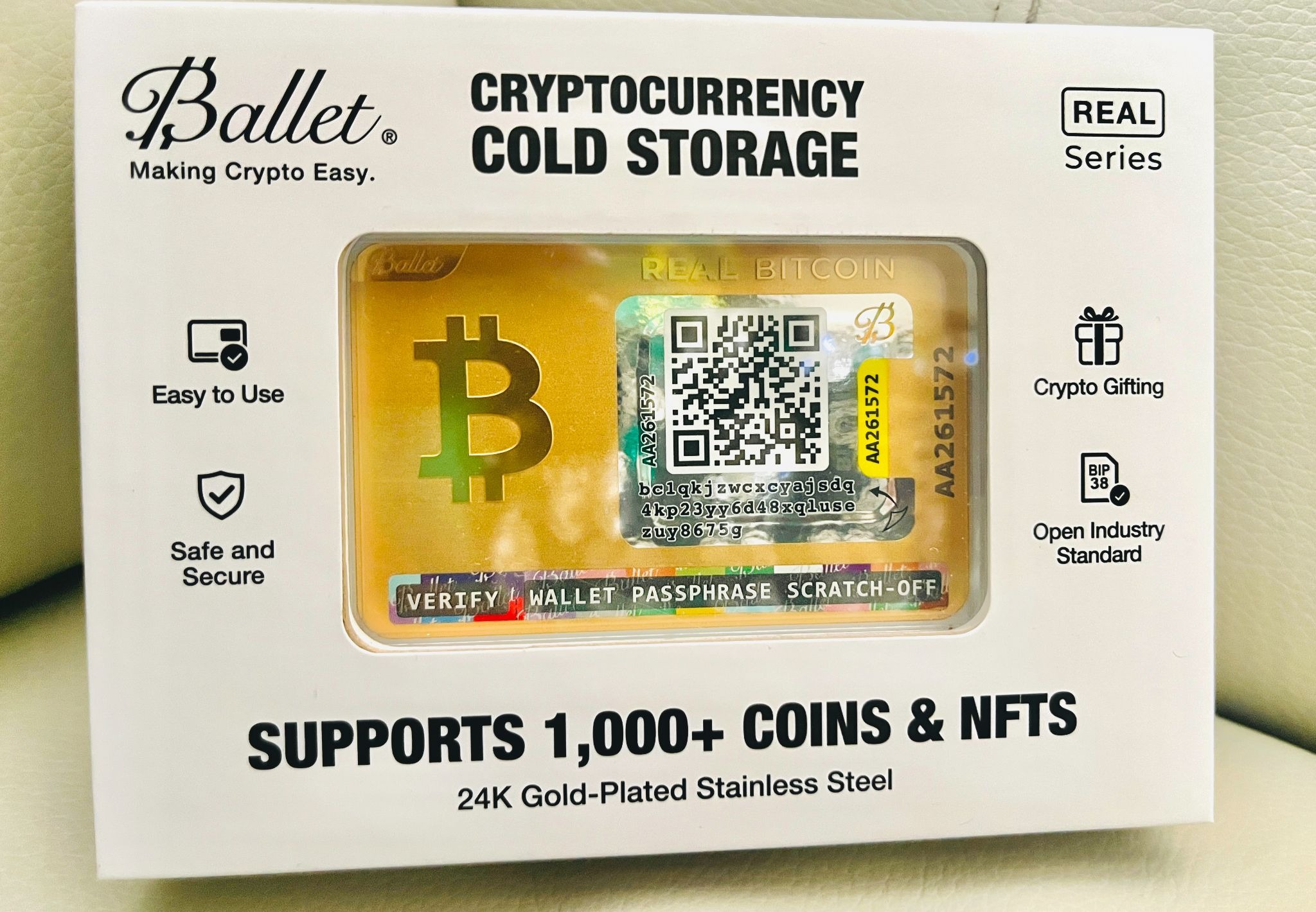
Before setup, users are instructed to inspect the packaging and security seal to make sure the wallet hasn’t been tampered with. The activation process runs through the Ballet Crypto app. After scanning the QR codes attached to the card, I was able to connect accounts, activate multiple currencies and transfer crypto assets within minutes. The gold card casing was created like a collectible, something you could see in a Cryptocurrency museum one day.
The setup felt surprisingly simple for an industry that often overwhelms first-time users with technical language, numerical sequences and security warnings.
Lee said that accessibility matters because crypto still struggles with trust.
“You do have to trust,” he said. “What you don’t want to do is fall into a mistake and trust a con artist or a fraudster.”
That skepticism has followed crypto since the beginning.
Before launching Ballet in 2019, Lee co-founded BTC China, later renamed BTCC, one of China’s first Bitcoin exchanges. Years earlier, his company experimented with physical Bitcoin collectibles made from titanium.
“They immediately became collector’s items,” Lee said.
Back then, Bitcoin itself still felt experimental.
The original Bitcoin Pizza Day transaction happened when a programmer named Laszlo Hanyecz offered 10,000 Bitcoin in exchange for pizza delivery. Someone accepted the trade.
“Before that, people were just sending Bitcoin back and forth,” Lee said. “Like giving people high fives.”
Now the story gets treated almost like a holiday inside crypto culture.
Each year the internet recalculates the current value of those coins. This year, Lee pulled up the number during our interview.
“10,000 Bitcoin will be worth $730 million,” he said.
The absurdity is part of why the story survives.
Two pizzas accidentally became one of the most expensive meals in modern history.
Lee pushed back on the idea that crypto has become “lifestyle branding,” claiming that Bitcoin developed like every other niche community online.
“Whether it’s golf, aviation, bowling or pickleball, everything has a subculture,” he said.
Crypto just happens to document itself differently. Through memes. Screenshots. Wallet cards. Twitter lore. Discord chats. Collector products.
And increasingly, physical objects.
For Lee, Bitcoin’s future has less to do with aesthetics and more to do with money itself.
“Money is shrinking,” he says. “The value is worth less today.”
He pointed to rising grocery prices, disappearing pennies and the declining purchasing power of cash as evidence.
“Everything’s more expensive because money has shrunk in terms of the goods you can buy,” Lee said.
That belief sits at the center of crypto culture itself. Many early Bitcoin adopters viewed cryptocurrency as protection against inflation and centralized banking systems capable of endlessly printing money.
Bitcoin was designed differently. Its supply is capped at 21 million coins.
“It’s built into the system,” Lee said. “Bitcoin cannot go more than 21 million units.”
Still, Lee acknowledged crypto remains chaotic.
“There’s too many scams,” he said. “Too many schemes.”
Even after 15 years in the industry, he believes mainstream understanding of Bitcoin is still far away.
“It might take another 5, 10, 15, 20 years until society really wakes up,” Lee said. “Bitcoin is the new money.”