-

- 22 June 2026
- Comment (0)
The Men Who Show Up: Honoring Wesley Hawkins Beyond Father's Day
Father's Day has come and gone, but I find myself still sitting with it. As a Black woman, I have spent a good part of my life learning the importance of speaking up — loudly and often — about the value of Black men in our community. We are quick, sometimes too quick, to talk about what's missing. June, as Men's Health Month and the month that holds Father's Day, gives us a moment to talk instead about what's present: the men who show up, who father in every sense of the word, whether or not they have biological children of their own. Wesley Hawkins, M.Ed., is one of those men. And his story deserves more than a single day of recognition. It deserves all year.
Hawkins does not traffic in theories. Everything he knows about what Baltimore's most vulnerable young people need, he knows because he once was one of them.
Growing up with two parents battling drug addiction, spending time in foster care, falling four grade levels behind in school — not because his mind didn't work, but because the instability around him made learning impossible — Hawkins lived what so many of the children he now serves are living. His mother passed away from a drug overdose in 2014. His father was a functional addict. There were stretches without running water, without heat, without enough food to keep a child's mind focused on anything other than survival.
"What I lacked was stability," he told me plainly. "I didn't have a stable household, a stable living environment. Once I got those things, I realized nothing was wrong with me."
What turned things around was a God-fearing aunt who took him in, got him tutoring, mentoring, and therapy — and, just as importantly, believed in him. "I needed love. I needed nourishment. I needed somebody to care. I needed just a hug sometimes. I needed somebody to just believe in me." Today, Hawkins holds three degrees and is working on his fourth. He is a homeowner. And he has built an organization — the Nolita Project — dedicated to giving other young people exactly what he once needed. In many ways, Wesley Hawkins has become the father figure he needed as a child to hundreds of children who need one now.
A Father to a Community
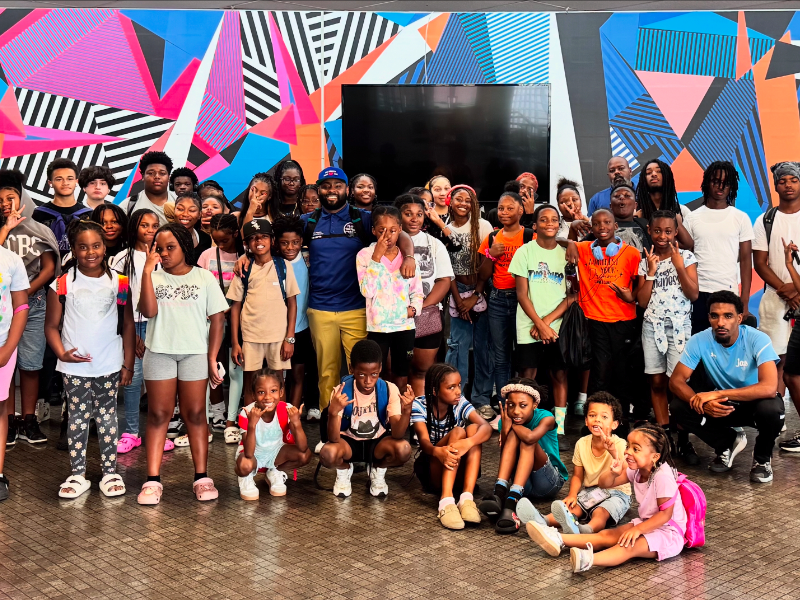
Founded in 2012 and incorporated as a nonprofit in 2016, the Nolita Project just celebrated ten years of official status this past January. Operating across East and West Baltimore, the organization currently serves more than 300 youth and families — and it does so the way a good father does: showing up consistently, holding people accountable with love, and refusing to give up on anyone.
The Nolita Project operates on three main pillars: education-based work in partnership with Baltimore City Public Schools; youth diversion, supporting high-risk youth and those returning from juvenile detention; and reentry services for adults coming back to the community after incarceration. School visits and home visits. Tutoring and mentoring. Help finding housing and employment. Food, clothing, and hygiene items when needed. Resume building. Life goal planning. "We work as a case manager," Hawkins explained. "But we also show up as someone who loves them."
This is what fatherhood looks like when it is offered as a community resource rather than reserved for biological children alone. Hawkins is particularly clear-eyed about who the Nolita Project serves: the young people that schools label as behavior problems, learning disabilities, or worse. He knows those labels. He wore them himself. "People were demonizing, labeling, judging — and not asking why or what's wrong," he said. "Trauma built on top of trauma, with a lack of resources, leads to a ton of health issues and a mental health crisis going on in neighborhoods and communities."
For Men's Health Month, this matters in a particular way. We often measure men's health in narrow terms — blood pressure, prostate screenings, the things we can put on a chart. Hawkins's life and work insist on a wider lens. Health, for him, includes whether a man had someone to believe in him as a boy. It includes whether he had stability, nourishment, and a hand to hold when the world told him he was broken. Healing that, for himself and now for hundreds of others, is its own form of men's health work.
Why Sexual Health Cannot Be Left Out
Hawkins's understanding of health is holistic, and that includes sexual health — an area where he serves as an ambassador with RnD Associates. He connected with Executive Director Rebkha Atnafou first through the Johns Hopkins Neighborhood Bunting Leadership Program, and later through years of crossing paths on panels and in community work. He recognized a natural alignment. Both were doing work rooted in relationship, trust, and reaching the people everyone else tends to overlook.
"Sexual health matters," he said without hesitation. "If a lot of these children, students, and families don't know and don't understand how to protect themselves — how to make sure that if they are having sex, they are being safe — then we're leaving out a critical piece of their overall wellness."
He is candid about what he sees on the ground. Young people are sexually active at rates that adults either don't know about or have convinced themselves aren't happening. "These children are having sex, at a high rate, and a lot of them are learning about it from the world — from videos, from magazines, from trial and error — instead of from trusted adults in their lives." For young men especially, Hawkins believes, this is where present, trustworthy male role models become essential. Boys need men in their lives who can speak honestly with them about protecting their bodies, respecting their partners, and understanding the long-term weight of their choices — conversations that too often go unmodeled.
The consequences of that gap are real and lasting. Hawkins has seen young people contract STDs that left them not just physically affected, but mentally and emotionally traumatized. "Some STDs cause long-term harm. Some you can't get rid of at all," he said. "That messes with your physical health and your mental health."
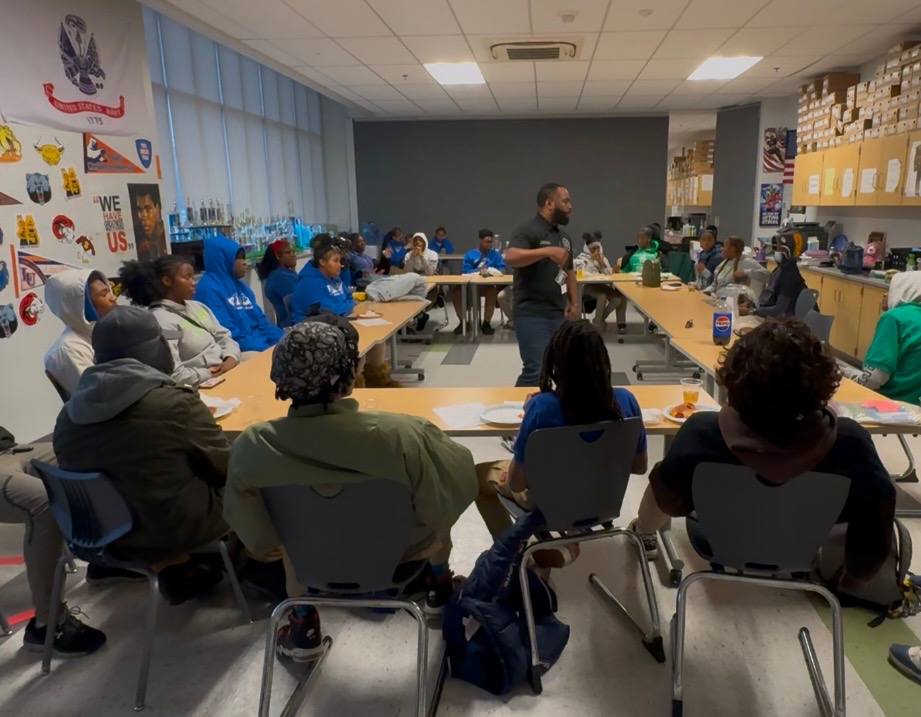
The Nolita Project After-School Program – Reach Partnership High School. Students participated in a powerful class discussion focused on gun violence and its impact on individuals, families, and communities. Through open dialogue, critical thinking, and shared experiences, youth explored solutions, prevention strategies, and the importance of making positive choices while developing the skills to become leaders and advocates for change.
Trust Is the Curriculum
What makes the Nolita Project's approach work is the same thing that makes a good father effective: relationship. Hawkins and his team build trust long before they introduce difficult conversations. They speak the language of the communities they serve and create spaces free of judgment, condescension, and shame.
"Once you have a relationship and trust, there aren't too many things you can't discuss," he said. "We want to make sure it's a safe space, a non-judgmental space, a space where they know they can speak freely."
This is the version of Black manhood I want this community to see and celebrate — not just in June, not just around a single Sunday in the calendar, but all year long. Wesley Hawkins took the absence in his own childhood and turned it into presence for hundreds of others. He is proof that fatherhood, at its best, is not only about whose blood runs in a child's veins. It is about who shows up, who stays, and who believes in a young person long enough for that young person to believe in themselves.
Father's Day may be behind us. The need for men like Wesley Hawkins is not seasonal. It is constant. And so is our gratitude.
Michelle Petties is a TEDx speaker, Food Story coach, and the award-winning author of the memoir Leaving Large: The Stories of a Food Addict. After gaining and losing 700 pounds, Michelle discovered the secret to overcoming stress and emotional overeating. Her free workbook, Mind Over Meals, reveals her core principles for losing weight and keeping it off.